
Google Local Services Ads in Canada: Full Guide (2026)

Google Local Services Ads in Canada: eligible categories, pay-per-lead costs, the new Google Verified badge, and how to decide if LSAs fit your business.
Google Local Services Ads in Canada: The Complete Guide for Service Businesses (2026) Focus keyword: google local services ads Meta title: Google Local Services Ads in Canada: 2026 Guide Meta description: Google Local Services Ads in Canada: eligible categories, pay-per-lead costs, the new Google Verified badge, and how to decide if LSAs fit your business. Author: Courtney Stephen Schema: Article + FAQPage Status: Draft — ready to publish Target URL: /google-local-services-ads-canada/ Last updated: 2026-07-11 (update in RankMath "Last Updated" field when publishing) Google Local Services Ads are pay-per-lead ads that appear above the regular search ads on Google. In Canada in 2026, they are available to 17 home service categories, from plumbers and electricians to lawn care and movers. You pay only when a customer calls or messages you, not when they click, and your ranking depends more on reviews and answered calls than on your budget. This guide covers how they work, what they cost, and whether they fit your business. Contents What Are Google Local Services Ads? Local Services Ads vs. Standard Google Ads Which Businesses Can Use Google Local Services Ads in Canada? Google Guaranteed vs. Google Screened: Both Are Now Google Verified How Much Do Local Services Ads Cost? How LSA Ranking Works (and Why It's Not About Budget) Should Your Business Run Local Services Ads? Frequently Asked Questions What Are Google Local Services Ads? Local Services Ads (LSAs) are the listings that appear at the very top of Google when someone searches for a local service like "plumber Oakville" or "hvac repair near me." They sit above the traditional text ads and show your business name, star rating, review count, phone number, and a verification badge from Google. Two things make them different from every other ad format Google sells. You pay per lead, not per click. With standard Google Ads, you're charged every time someone clicks, whether they contact you or not. With LSAs, Google charges you only for valid leads: a phone call or message that comes through your ad. Someone can look at your listing, read your reviews, and leave without costing you anything. You have to earn your way in. Anyone with a credit card can launch a standard Google Ads campaign this afternoon. LSAs require your business to pass Google's screening and verification process first, which includes licence checks, insurance verification, and background checks depending on your category. That barrier is a feature, not a bug. It keeps the ad unit trustworthy, which is why customers use it. LSAs first arrived in Canada in late 2018, starting in Vancouver and Toronto, and have since become a permanent fixture at the top of Canadian search results for eligible categories. Local Services Ads vs. Standard Google Ads The two formats look similar on the results page but behave very differently behind the scenes. Local Services Ads Standard Google Ads You pay for Valid leads (calls and messages) Clicks Position on page Very top, above text ads Below LSAs Targeting Job categories + service area Keywords, audiences, locations Landing page None — your Google profile is the destination Your website or landing page Ranking driven by Bid plus profile quality (reviews, responsiveness) Ad Rank (bid × Quality Score) Setup time Weeks (screening required) Same day Creative control Minimal — Google formats the listing Full control of copy and pages Availability in Canada 17 home service categories Any legal business The trade-off is control. LSAs are simpler to run and harder to waste money on, but you give up the levers that make standard campaigns powerful: keyword selection, ad copy testing, and a landing page built to convert. In the local service accounts we work with at Playbook, the two formats do different jobs. LSAs capture the urgent "call someone now" demand. Search campaigns win the higher-consideration jobs where the customer compares three websites before deciding. Which Businesses Can Use Google Local Services Ads in Canada? Most articles get this wrong because they quote the American list. Canadian availability is more limited. At the time of writing, Google's screening and verification requirements page for Canada lists 17 categories, all of them home services: Appliance repair Carpet and upholstery cleaning Electrician Garage door House cleaning HVAC Junk removal Lawn care Locksmith Moving Pest control Plumber Roofing Tree service Water damage services Window cleaning Window repair In the United States, the program extends much further. Google has expanded LSAs to more than 70 business types, including legal, real estate, education, pet care, wellness, and health care categories. Those professional and health verticals have not been rolled out in Canada. That means: if you run a Canadian law firm, clinic, or real estate business, LSAs are not an option for you yet, and standard Google Ads remains your top-of-page play. If you're in the trades or home services, you're in the eligible group, and you should also confirm availability for your specific city with Google's eligibility checker, because availability can vary by area. Two logistics to plan around. First, Google says the screening and verification process takes 3 to 4 weeks on average after you submit your documents, so start well before you need the leads. Second, Google offers pre-badge ads that let you start receiving leads after passing preliminary checks while you finish full verification. Pre-badge listings show below fully verified providers, and they aren't available for garage door services, health care verticals, or locksmiths. Google Guaranteed vs. Google Screened: Both Are Now Google Verified If you've researched LSAs before, you've seen two badges mentioned everywhere: the green Google Guaranteed checkmark for home services, and Google Screened for professional services like law and real estate. Both are gone. In October 2025, Google unified all LSA badges into a single Google Verified badge, replacing Google Guaranteed, Google Screened, License Verified by Google, and the Money Back Guarantee program. Here's what changed and what didn't: The badge. All eligible advertisers who complete screening and verification now display the same Google Verified badge. Per Google's help centre, existing advertisers who had completed verification earned the new badge automatically, and their ads continued running as usual. Verified profiles also show which specific checks the business passed, which adds transparency for customers. The money-back guarantee. The old Google Guaranteed badge came with a consumer reimbursement program: unhappy customers who booked through an LSA could claim a refund from Google, with a lifetime cap of $2,000 in the US and Canada. Google discontinued that guarantee as part of the badge change. The screening. The requirements to earn the badge are the same as before. The vetting didn't get easier; the label got simpler. For business owners, the practical takeaway is simple: the vetting still exists, the trust signal still exists, and the placement still exists. Only the name and the refund program changed. Be skeptical of any article or agency still selling you "Google Guaranteed" as a current program. It's a sign their information is at least a year old. How Much Do Local Services Ads Cost? There's no monthly platform fee. You set a budget based on how many leads you want, and you're charged per valid lead. Google lets you set an average weekly budget, and while spend can fluctuate week to week, you never pay more than your monthly maximum. You choose between two bidding modes: let Google maximize the number of leads within your budget, or set a cap on the most you're willing to pay per lead. So what does a lead actually cost? Google doesn't publish official rates, and Canadian-specific benchmark data doesn't exist publicly yet. The best available dataset is American: the SearchLight Home Services LSA Benchmark, which tracked $6.72M USD in LSA spend across 888 contractors in February 2026. Treat these as directional for Canadian markets, in US dollars: Trade Average cost per lead (USD) Electrical $39 HVAC $51 Blended average (all home services) $53 Plumbing $57 Drain / sewer $59 The same dataset found an average book rate of 43.9%, meaning roughly four in ten LSA leads turned into booked jobs, at an average cost per paying customer of $233 USD. Two useful comparisons. First, those per-lead figures are lower than what home services businesses typically pay through standard search ads, where LocaliQ's 2025 home services benchmarks put the average cost per lead at $90.92 USD. Second, the per-click prices that produce those search-ad leads are steep on their own; we broke down what Ontario businesses actually pay in our Ontario cost guide. What to budget: in our experience, you need enough volume to judge the channel honestly, which for most trades means at least 10 to 15 leads per month. At benchmark lead costs, that's roughly $500 to $900 per month. Below that, you won't have enough data to know whether it's working. One billing detail worth knowing before you start: Google's models reassess charged leads over time and issue credits automatically when a lead is determined to be low quality, and you can flag bad leads through the feedback survey on each lead. In our experience managing lead-gen campaigns for local service businesses, the accounts that treat lead feedback as a weekly habit get cleaner lead flow over time than the ones that only complain when the bill arrives. If you're not sure whether that math works for your business, book a free discovery call and we'll run the numbers with you against your actual job values. How LSA Ranking Works (and Why It's Not About Budget) Standard Google Ads ranking is a math problem: your bid multiplied by your Quality Score. LSA ranking is a trust problem. Google's documentation describes LSA ordering as an auction based on your bid and your overall profile quality. In practice, the profile quality side is driven by things a spreadsheet can't buy: Your review score and review count. Google confirms that star ratings and number of reviews affect how your business is ranked within Local Services Ads, and reviews display directly in the ad, so they affect both whether you rank and whether people call. Your responsiveness. Every LSA call and message runs through a Google forwarding number, so Google can measure exactly how often you answer. In the accounts we've seen, businesses that consistently miss calls lose visibility over time, not just the missed lead. Your business hours, service area, and proximity to the person searching. One more official quirk: if your business has multiple locations serving the same area, Google shows only your highest-ranking ad for a given search. The counterintuitive part: the cheapest ranking improvement available is answering your phone. We see this pattern constantly in the local service businesses we talk to. The owner invests in ads, then takes calls between jobs, misses half of them, and concludes the ads don't work. On LSAs, that behaviour costs you twice: you lose the lead, and the platform learns you're a bad match for the next one. Before you spend a dollar on LSAs, decide who answers the phone during business hours, every time. The same discipline problem sinks standard campaigns too. We covered the most common self-inflicted wounds in this breakdown of small business Google Ads mistakes. Should Your Business Run Local Services Ads? A simple decision framework, based on how we assess this with clients: Run LSAs if all three are true: You're in an eligible Canadian category. Check the list above, then confirm your city with Google's eligibility tool. Your review profile can compete. If the businesses currently showing in LSAs for your service have 4.8 stars and 100+ reviews and you have 6 reviews, fix that first. Your ranking and your conversion rate both depend on it. Someone reliably answers the phone. Responsiveness feeds your visibility and leads cost real money. Paying $50 to send a customer to voicemail is the worst deal in advertising. Hold off if: you're pre-revenue on reviews, nobody can own call answering, or your category isn't available in Canada yet. And keep this in perspective: LSAs are one lead source, not a complete strategy. Lead volume is capped by your category, your service area, and how many people search on any given day. You can't expand it with better copy or new keywords the way you can with a search campaign. That's why we treat LSAs as a complement to Google Ads rather than a replacement, and it's also why the "who should manage this" question matters. If you're weighing whether to run paid search yourself or bring in help, our agency vs. DIY breakdown walks through the decision with real numbers. If you want the demand side of your business built as a system, from LSAs and search campaigns through to tracking and follow-up, that's what our Google Ads management service is built for. Frequently Asked Questions What are Google Local Services Ads? Google Local Services Ads are pay-per-lead ads that appear at the very top of Google search results for local services, above the standard text ads. They show your business name, reviews, phone number, and a Google Verified badge, and you pay only when a customer calls or messages you through the ad, not when they click. Are Google Local Services Ads available in Canada? Yes, but for fewer categories than in the United States. Google's Canada requirements page currently lists 17 home service categories, including plumbers, electricians, HVAC, roofing, garage door, moving, house cleaning, lawn care, and pest control. Professional categories like lawyers and real estate agents, which are eligible in the US, are not available in Canada. How much does a Local Services Ads lead cost? Google charges per valid lead, and prices vary by trade and market. The largest recent benchmark, based on US data from February 2026, found home services leads averaged $53 USD, ranging from $39 for electrical to $59 for drain and sewer work. Canadian-specific benchmark data isn't published yet, so treat US figures as directional. What happened to the Google Guaranteed badge? Google retired the Google Guaranteed and Google Screened badges in October 2025, replacing them with a single Google Verified badge for all screened advertisers. The consumer money-back guarantee that came with Google Guaranteed was discontinued at the same time. The screening requirements stayed the same, and existing verified advertisers received the new badge automatically. How long does Local Services Ads verification take? Google says the screening and verification process takes 3 to 4 weeks on average after you submit your documents. Depending on your category and province, it can include background checks, licence checks, and proof of insurance. In some categories, pre-badge ads let you receive leads while you finish full verification. Do Local Services Ads replace regular Google Ads? No. LSAs capture urgent, ready-to-call demand but offer limited volume, no landing pages, and almost no creative control. Standard Google Ads campaigns reach customers who are still comparing options and let you control keywords, messaging, and where the click goes. Most established service businesses get the best results running both together. How do I rank higher in Local Services Ads? Google ranks LSAs through an auction that weighs your bid and your overall profile quality. In practice, the biggest levers are your review score and review count, how consistently you answer calls and messages, your business hours, and your proximity to the searcher. Answering every call is usually the fastest improvement available. Does Playbook Digital manage Local Services Ads? We build paid lead generation systems for Canadian service businesses, and that includes advising on whether LSAs, standard Google Ads, or both fit your budget and category. If you want an honest read on where your ad budget will produce the most booked jobs, book a free discovery call

Google Local Services Ads are pay-per-lead ads that appear above the regular search ads on Google. In Canada in 2026, they are available to 17 home service categories, from plumbers and electricians to lawn care and movers. You pay only when a customer calls or messages you, not when they click, and your ranking depends more on reviews and answered calls than on your budget. This guide covers how they work, what they cost, and whether they fit your business.

Contents

  • What Are Google Local Services Ads?
  • Local Services Ads vs. Standard Google Ads
  • Which Businesses Can Use Google Local Services Ads in Canada?
  • Google Guaranteed vs. Google Screened: Both Are Now Google Verified
  • How Much Do Local Services Ads Cost?
  • How LSA Ranking Works (and Why It’s Not About Budget)
  • Should Your Business Run Local Services Ads?
  • Frequently Asked Questions
 

What Are Google Local Services Ads?

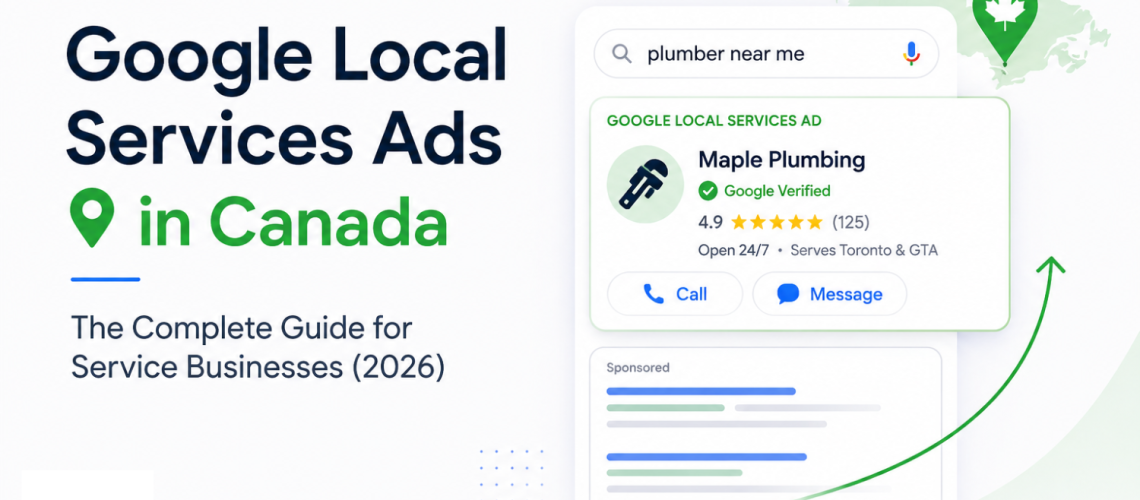
Local Services Ads (LSAs) are the listings that appear at the very top of Google when someone searches for a local service like “plumber Oakville” or “hvac repair near me.” They sit above the traditional text ads and show your business name, star rating, review count, phone number, and a verification badge from Google.

Two things make them different from every other ad format Google sells.

You pay per lead, not per click. 
With standard Google Ads, you’re charged every time someone clicks, whether they contact you or not. With LSAs, Google charges you only for valid leads: a phone call or message that comes through your ad. Someone can look at your listing, read your reviews, and leave without costing you anything.

You have to earn your way in.
Anyone with a credit card can launch a standard Google Ads campaign this afternoon. LSAs require your business to pass Google’s screening and verification process first, which includes license checks, insurance verification, and background checks depending on your category. That barrier is a feature, not a bug. It keeps the ad unit trustworthy, which is why customers use it.

LSAs first arrived in Canada in late 2018, starting in Vancouver and Toronto, and have since become a permanent fixture at the top of Canadian search results for eligible categories.

Local Services Ads vs. Standard Google Ads

The two formats look similar on the results page but behave very differently behind the scenes.

 Local Services AdsStandard Google Ads
You pay forValid leads (calls and messages)Clicks
Position on pageVery top, above text adsBelow LSAs
TargetingJob categories + service areaKeywords, audiences, locations
Landing pageNone — your Google profile is the destinationYour website or landing page
Ranking driven byBid plus profile quality (reviews, responsiveness)Ad Rank (bid × Quality Score)
Setup timeWeeks (screening required)Same day
Creative controlMinimal — Google formats the listingFull control of copy and pages
Availability in Canada17 home service categoriesAny legal business

The trade-off is control. LSAs are more simple to run and harder to waste money on, but you give up the levers that make standard campaigns powerful such as keyword selection, ad copy testing, and a landing page built to convert.

In the local service accounts we work with at Playbook, the two formats do different jobs. LSAs capture the urgent “call someone now” demand. Search campaigns win the higher-consideration jobs where the customer compares three websites before deciding.

Which Businesses Can Use Google Local Services Ads in Canada?

Most articles get this wrong because they quote the American list. Canadian availability is more limited.

At the time of writing, Google’s screening and verification requirements page for Canada lists 17 categories, all of them home services:

  • Appliance repair
  • Carpet and upholstery cleaning
  • Electrician
  • Garage door
  • House cleaning
  • HVAC
  • Junk removal
  • Lawn care
  • Locksmith
  • Moving
  • Pest control
  • Plumber
  • Roofing
  • Tree service
  • Water damage services
  • Window cleaning
  • Window repair

In the United States, the program extends much further. Google has expanded LSAs to more than 70 business types, including legal, real estate, education, pet care, wellness, and health care categories. Those professional and health verticals have not been rolled out in Canada.

That means if you run a Canadian law firm, clinic, or real estate business, LSAs are not an option for you yet, and standard Google Ads remains your top-of-page play. If you’re in the trades or home services, you’re in the eligible group, and you should also confirm availability for your specific city with Google’s eligibility checker, because availability can vary by area.

There are two logistics to plan around. First, Google says the screening and verification process takes 3 to 4 weeks on average after you submit your documents, so start well before you need the leads. Second, Google offers pre-badge ads that let you start receiving leads after passing preliminary checks while you finish full verification. Pre-badge listings show below fully verified providers, and they aren’t available for garage door services, health care verticals, or locksmiths.


Google Guaranteed vs. Google Screened: Both Are Now Google Verified

If you’ve researched LSAs before, you’ve seen two badges mentioned everywhere: the green Google Guaranteed checkmark for home services, and Google Screened for professional services like law and real estate.

Both are gone. In October 2025, Google unified all LSA badges into a single Google Verified badge, replacing Google Guaranteed, Google Screened, License Verified by Google, and the Money Back Guarantee program.

Here’s what changed and what didn’t:

The Google Verified badge

All eligible advertisers who complete screening and verification now display the same Google Verified badge. Per Google’s help centre, existing advertisers who had completed verification earned the new badge automatically, and their ads continued running as usual. Verified profiles also show which specific checks the business passed, which adds transparency for customers.

The Google Guaranteed Badge Money-back Guarantee
The old Google Guaranteed badge came with a consumer reimbursement program.  Unhappy customers who booked through an LSA could claim a refund from Google, with a lifetime cap of $2,000 in the US and Canada. Google discontinued that guarantee as part of the badge change.

The Screening Process
The requirements to earn the badge are the same as before. The vetting didn’t get easier, just the label got simplified.

For business owners, the practical takeaway is simple: the vetting still exists, the trust signal still exists, and the placement still exists. Only the name and the refund program changed. Be skeptical of any article or agency still selling you “Google Guaranteed” as a current program. It’s a sign their information is at least a year old.


How Much Do Local Services Ads Cost?

There’s no monthly platform fee. You set a budget based on how many leads you want, and you’re charged per valid lead. Google lets you set an average weekly budget, and while spend can fluctuate week to week, you never pay more than your monthly maximum.

You choose between two bidding modes: 

  1. let Google maximize the number of leads within your budget, or 
  2. set a cap on the most you’re willing to pay per lead.

So what does a lead actually cost? Google doesn’t publish official rates, and Canadian-specific benchmark data doesn’t exist publicly yet. The best available dataset is American: the SearchLight Home Services LSA Benchmark, which tracked $6.72M USD in LSA spend across 888 contractors in February 2026. Treat these as directionally correct for Canadian markets, in US dollars:

TradeAverage cost per lead (USD)
Electrical$39
HVAC$51
Blended average (all home services)$53
Plumbing$57
Drain / sewer$59

The same dataset found an average book rate of 43.9%, meaning roughly four in ten LSA leads turned into booked jobs, at an average cost per paying customer of $233 USD.

Two useful comparisons. First, those per-lead figures are lower than what home services businesses typically pay through standard search ads, where LocaliQ’s 2025 home services benchmarks put the average cost per lead at $90.92 USD. Second, the per-click prices that produce those search-ad leads are steep on their own. We broke down what Ontario businesses actually pay in our Ontario cost guide.

How Much Should You Budget for LSAs?

In our experience, you need enough volume to judge the channel honestly, which for most trades means at least 10 to 15 leads per month. At benchmark lead costs, that’s roughly $500 to $900 per month. Below that, you won’t have enough data to know whether it’s working.

One billing detail worth knowing before you start: Google’s models reassess charged leads over time and issue credits automatically when a lead is determined to be low quality, and you can flag bad leads through the feedback survey on each lead. In our experience managing lead-gen campaigns for local service businesses, the accounts that treat lead feedback as a weekly habit get cleaner lead flow over time than the ones that only complain when the bill arrives.

If you’re not sure whether that math works for your business, book a free discovery call and we’ll run the numbers with you against your actual job values.


How LSA Ranking Works (and Why It’s Not About Budget)

Standard Google Ads ranking is a math equation. They consider your bid multiplied by your Quality Score. LSA ranking is all about trust.

Google’s documentation describes LSA ordering as an auction based on your bid and your overall profile quality. In practice, the profile quality side is driven by things a spreadsheet can’t impact:

  • Your review score and review count. Google confirms that star ratings and number of reviews affect how your business is ranked within Local Services Ads, and reviews display directly in the ad, so they affect both whether you rank and whether people call.
  • Your responsiveness. Every LSA call and message runs through a Google forwarding number, so Google can measure exactly how often you answer. In the accounts we’ve seen, businesses that consistently miss calls lose visibility over time, not just the missed lead.
  • Your business hours, service area, and proximity to the person searching.

One more detail to note is that if your business has multiple locations serving the same area, Google shows only your highest-ranking ad for a given search.

The most cost effective way to improve your ranking is answering your phone. We see this pattern constantly in the local service businesses we talk to. The owner invests in ads, then takes calls between jobs, misses half of them, and concludes the ads don’t work. On LSAs, that behaviour costs you double – you lose the lead, and the platform learns to not rank you because you miss calls. Before you spend a dollar on LSAs, decide who answers the phone during business hours, every time. If answering the phone is a challenge for you, talk to us about our marketing automation systems and how we can help set you up with an AI receptionist so you never miss a lead.

The same discipline problem sinks standard campaigns too. We covered the most common self-inflicted wounds in this breakdown of small business Google Ads mistakes.


Should Your Business Run Local Services Ads?

A simple decision framework, based on how we assess this with clients:

Run LSAs if all three are true:

  1. You’re in an eligible Canadian category. Check the list above, then confirm your city with Google’s eligibility tool.
  2. Your review profile can compete. If the businesses currently showing in LSAs for your service have 4.8 stars and 100+ reviews and you have 6 reviews, fix that first. Your ranking and your conversion rate both depend on it.
  3. Someone reliably answers the phone. Responsiveness feeds your visibility and leads cost real money. Paying $50 to send a customer to voicemail is the worst deal in advertising.

LSAs aren’t for you yet if:

  1. You’re light on reviews
  2. Nobody can own call answering, or 
  3. Your category isn’t available in Canada yet.

LSAs are one lead source, not a complete strategy

Lead volume is capped by your category, your service area, and how many people search on any given day. You can’t expand it with better copy or new keywords the way you can with a search campaign. That’s why we treat LSAs as a complement to Google Ads rather than a replacement, and it’s also why the “who should manage this” question matters. If you’re weighing whether to run paid search yourself or bring in help, our agency vs. DIY breakdown walks through the decision with real numbers.

If you want the demand side of your business built as a system, from LSAs and search campaigns through to tracking and follow-up, that’s what our Google Ads management service is built for. 

Frequently Asked Questions

Google Local Services Ads are pay-per-lead ads that appear at the very top of Google search results for local services, above the standard text ads. They show your business name, reviews, phone number, and a Google Verified badge, and you pay only when a customer calls or messages you through the ad, not when they click.

Yes, but for fewer categories than in the United States. Google’s Canada requirements page currently lists 17 home service categories, including plumbers, electricians, HVAC, roofing, garage door, moving, house cleaning, lawn care, and pest control. Professional categories like lawyers and real estate agents, which are eligible in the US, are not available in Canada.

Google charges per valid lead, and prices vary by trade and market. The largest recent benchmark, based on US data from February 2026, found home services leads averaged $53 USD, ranging from $39 for electrical to $59 for drain and sewer work. Canadian-specific benchmark data isn’t published yet, so treat US figures as directional.

Google retired the Google Guaranteed and Google Screened badges in October 2025, replacing them with a single Google Verified badge for all screened advertisers. The consumer money-back guarantee that came with Google Guaranteed was discontinued at the same time. The screening requirements stayed the same, and existing verified advertisers received the new badge automatically.

Google says the screening and verification process takes 3 to 4 weeks on average after you submit your documents. Depending on your category and province, it can include background checks, licence checks, and proof of insurance. In some categories, pre-badge ads let you receive leads while you finish full verification.

No. LSAs capture urgent, ready-to-call demand but offer limited volume, no landing pages, and almost no creative control. Standard Google Ads campaigns reach customers who are still comparing options and let you control keywords, messaging, and where the click goes. Most established service businesses get the best results running both together.

Google ranks LSAs through an auction that weighs your bid and your overall profile quality. In practice, the biggest levers are your review score and review count, how consistently you answer calls and messages, your business hours, and your proximity to the searcher. Answering every call is usually the fastest improvement available.

We build paid lead generation systems for Canadian service businesses, and that includes advising on whether LSAs, standard Google Ads, or both fit your budget and category. If you want an honest read on where your ad budget will produce the most booked jobs, book a free discovery call.

LinkedIn
X
Email
Facebook
Picture of James Lawson

James Lawson

Head Growth Partner at Playbook Digital.